
Once potatoes are cut, their internal tissue is exposed to the air, making them susceptible to enzymatic browning, which causes the surface of the potato strips to gradually change color. Furthermore, because cut potatoes contain moisture, prolonged exposure to the air—combined with factors such as temperature, the presence of microorganisms, and the storage environment—can lead to further deterioration.
Through proper processing and flash-freezing, manufacturers can effectively preserve the appearance, texture, and eating quality of French fries. When stored in appropriate packaging and maintained within a cold chain, frozen fries have a longer shelf life, which facilitates inventory management for food processors and restaurant chains. Once purchased, these frozen fries can be prepared—typically by deep-frying or baking, following the product instructions—without the need for any preliminary preparation such as washing, peeling, or cutting.
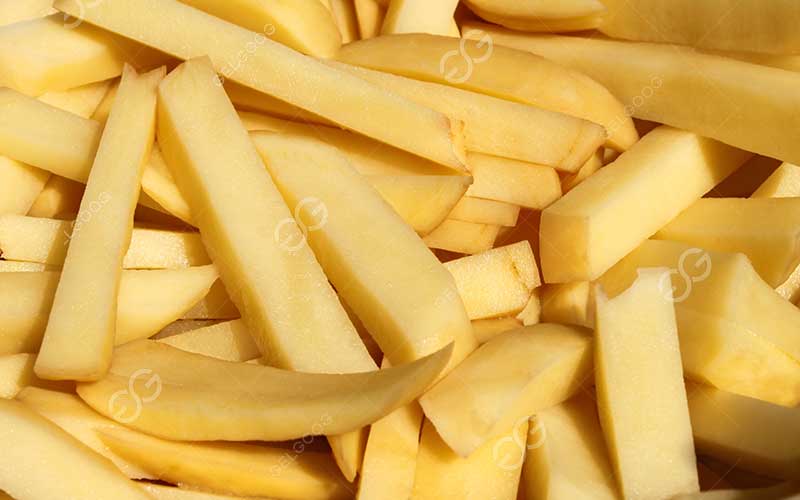
How to make fresh frozen french fries?
1. Potato Washing
Remove soil, grit, stones, and surface impurities.
2. Potato Peeling
Remove the outer skin to minimize impurities during subsequent processing.
3. Potato Cutting
Cut the potatoes into uniform strips according to product specifications.
4. Rinsing and Air-Drying
Remove excess surface starch and debris from the cutting process, then eliminate residual surface moisture.
5. Quick-Freezing
Rapidly freeze the potato strips to facilitate subsequent frozen storage and transportation.
The above outlines the basic processing workflow. In actual industrial production, additional steps—such as sorting, trimming, blanching, draining or drying, pre-frying, and packaging—may be incorporated depending on the product positioning. Whether these steps are required depends on whether the product is intended to be raw frozen fries or pre-fried frozen fries.
What should be kept in mind during the processing of frozen fresh-cut fries?
1. Selecting Potato Varieties Suitable for Processing
Different potato varieties vary in terms of dry matter content, reducing sugar content, and structural characteristics. These factors influence the color, texture, and subsequent cooking performance of the fries. Processing facilities should select appropriate raw materials based on the target product, while avoiding potatoes that are sprouted, rotten, or severely damaged.
2. Minimize the waiting time after cutting.
Cutting damages the cellular structure of the potatoes, making their internal components more exposed to the air. Therefore, the sequence of processes—including washing, peeling, cutting, rinsing, and freezing—should be carefully coordinated to avoid leaving semi-processed products sitting for extended periods.
3. Determining the Processing Method Based on Product Type
Fresh-frozen fries and pre-fried frozen fries are not identical products. Therefore, when designing a production line, a factory must first determine the specific product type before configuring the appropriate equipment.For food processing companies planning to enter the frozen fresh fries business, utilizing a professional frozen fresh french fries processing line allows for the seamless integration of potato pre-processing and cryogenic freezing. This reduces the need for manual labor and enhances production efficiency. If you would like more information, please feel free to leave us a message.