
In the production of french fries or potato chips, blanching serves as a critical pre-treatment step. A properly executed blanching process not only enhances product quality but also ensures greater stability in the fries’ color, texture, and structural integrity following deep-frying. Consequently, within a french fries production line, blanching is typically an indispensable stage, situated between the slicing and frying processes.
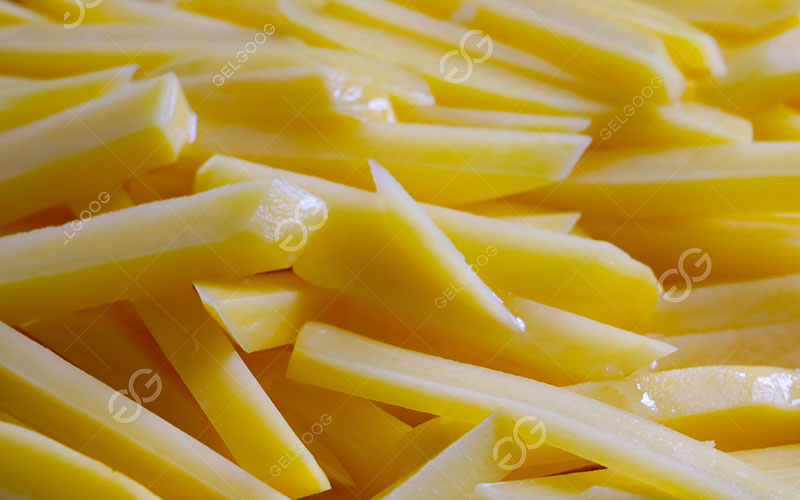
Why Is Blanching Necessary for Potatoes?
During the processing of french fries and potato chips, washing, peeling, and slicing the potatoes causes a significant amount of starch and reducing sugars to be released onto their surfaces. If frying is conducted under these conditions, it can very easily lead to issues such as the finished product becoming excessively dark in color or lacking crispness. Therefore, the primary functions of blanching are as follows:
1. Removal of surface starch: Blanching effectively removes excess starch, resulting in fries that are less sticky and possess a more appealing appearance.
2. Prevention of browning: Blanching utilizes high temperatures to rapidly deactivate enzymatic activity, thereby preventing discoloration during processing and helping the fries retain their golden-yellow hue.
3. Improvement of texture: Potato strips that have undergone blanching are more prone to developing a crispy exterior when fried, while simultaneously maintaining a soft interior texture.
How long does it take to blanch potatoes?
Potato blanching is typically performed in hot water ranging from 85°C to 95°C. The specific blanching time varies depending on the size of the potato strips, the type of equipment used, and the product specifications.
Blanching time for french fries: 3–6 minutes
Blanching time for potato chips: 1–3 minutes
If the fries are thicker—for example, 10 mm or 12 mm—the blanching time is typically extended accordingly.
What factors require attention during the blanching process?
To ensure effective blanching results, the following factors must be carefully considered during actual production:
1. Maintain water purity: As starch is gradually released from the potatoes during blanching, the water must be replaced or filtered promptly to ensure it remains clean.
2. Cool immediately after blanching: Once blanching is complete, the potatoes should undergo cooling or air-drying to halt the heating process and prevent residual heat from continuing to soften them.
If you have any questions regarding the blanching process or blanching equipment, please feel free to contact us.